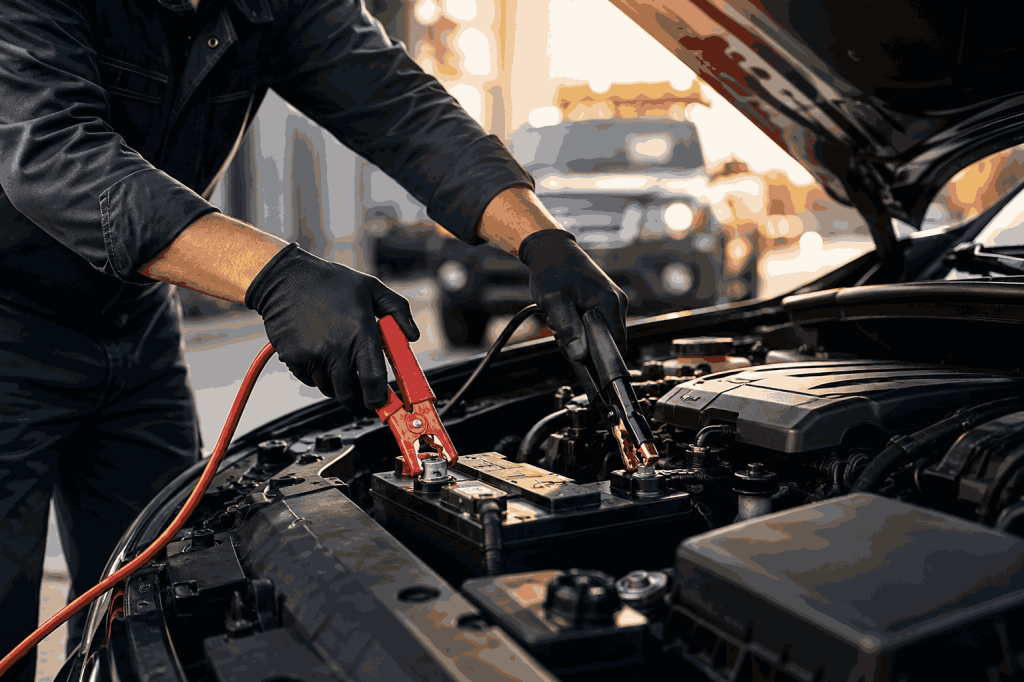
Battery Jumper Explained: Everything Drivers Need to Know
A dead car battery is one of the most common reasons vehicles fail to start. Whether you’re rushing to work, leaving the airport, or parked at home, a flat battery can disrupt your entire day. Fortunately, a battery jumper can help get your vehicle running again quickly and safely.
However, many drivers are unsure how a battery jumper works, whether it’s safe to use, or if it permanently fixes a dead battery. Understanding the correct procedures for jump-starting a car, identifying the signs of battery failure, and knowing when to replace your battery can help you avoid expensive repairs and roadside emergencies.
This thorough guide answers the most common People Also Ask (PAA) questions about battery jumpers, explains the difference between jump starters and jumper cables, and shares expert advice to keep your vehicle reliable year-round.
What Is a Battery Jumper?
A battery jumper is a device used to provide temporary electrical power to a vehicle with a discharged battery. It supplies enough current to crank the engine, allowing the alternator to recharge the battery while the engine is running.
There are two common types of battery jumpers:
Portable Battery Jumper
A portable battery jumper is a compact, rechargeable device that lets you jump-start your car without another vehicle. These devices are ideal for emergencies because they are easy to store and use.
Jumper Cables
Jumper cables connect a dead battery to a fully charged battery in another vehicle. Even though effective, this method requires another car and proper cable connections to avoid damage.
How Does a Battery Jumper Work?
When your battery is low on charge, it cannot provide enough power to start the engine. A car battery jump starter temporarily delivers electrical energy to the starter motor.
The process is simple:
- Connect the jumper correctly.
- Supply power to the battery.
- Start the engine.
- Disconnect the jumper safely.
- Allow the alternator to recharge the battery.
Remember that a battery jump start is only a temporary solution if the battery itself is failing.
Battery Jumper vs. Jumper Cables
Many people confuse these two tools, but they serve the same purpose in different ways.
| Battery Jumper | Jumper Cables |
| Works without another vehicle | Requires another vehicle |
| Portable and rechargeable | No internal power source |
| Safer for beginners | Higher risk if connected incorrectly |
| Ideal for emergencies | Best when assistance is available |
For most drivers, investing in a portable auto battery jump starter provides greater convenience and independence.
Common Reasons Your Car Needs a Jump Start
A dead battery doesn’t always mean the battery is defective.
Common causes include:
- Leaving Lights On – Headlights or interior lights left on overnight can completely drain the battery.
- Extreme Heat – High temperatures hasten battery wear and reduce charging efficiency.
- Old Battery – Most car batteries last between two and four years.
- Faulty Alternator – If the alternator fails to recharge the battery, repeated jump-starts may be necessary.
- Infrequent Driving – Vehicles left unused for long periods naturally lose battery charge.
- Electrical Drain – Aftermarket electronics or hidden electrical faults can slowly discharge the battery.
How to Jump Start a Car Safely
If you need to jump-start a car, follow these steps carefully.
- Step 1: Turn Everything Off – Switch off headlights, air conditioning, and accessories.
- Step 2: Connect the Positive Clamp – Attach the red clamp to the positive (+) terminal.
- Step 3: Connect the Negative Clamp – Attach the black clip to a suitable grounding point or negative terminal according to the manufacturer’s instructions.
- Step 4: Power the Jump Starter – Turn on the portable battery jumper.
- Step 5: Start the Engine – Attempt to start the vehicle.
- Step 6: Disconnect Safely – Remove the clamps in reverse order after the engine starts. Allow the engine to run for at least 20–30 minutes to help recharge the battery.
Can a Battery Jumper Damage Your Car?
A quality car battery jump starter is generally safe when used correctly.
Problems usually occur because of:
- Reversed polarity
- Low-quality jump starters
- Damaged cables
- Incorrect voltage
- Ignoring manufacturer instructions
Modern jump starters often include reverse-polarity protection, overload protection, and spark-proof technology for added safety.
Signs You Need More Than a Jump Start
Sometimes a car battery jumpstart gets the engine running, but the underlying issue remains.
You should schedule professional battery testing if you notice:
- Slow engine cranking
- Dashboard battery warning light
- Swollen battery case
- Corroded battery terminals
- Repeated need for jump starts
- Electrical accessories malfunctioning
- Battery older than three years
Repeated jump-starting is not a substitute for replacing a depleted battery.
How Long Should a Battery Last After a Jump Start?
A successful battery jump start should allow the battery to recharge if it is still healthy.
However, if the battery:
- Frequently loses charge
- Cannot hold voltage
- Is several years old
- Has internal damage
then replacement is usually the safest solution.
Professional battery testing can determine whether the battery is recoverable.
Choosing the Right Car Battery Jump Starter
Not all jump starters are suitable for every vehicle. Consider these features before purchasing:
Peak Current – Larger engines require higher peak current ratings.
Battery Capacit – Higher capacity allows multiple jump starts before recharging.
Safety Features – Choose models with:
- Reverse polarity protection
- Short circuit protection
- Overcharge protection
- Spark-proof clamps
USB Charging – Many portable jump starters also function as emergency power banks.
LED Flashlight – Useful in nighttime emergencies.
Can You Jump Start Every Vehicle?
Most petrol and diesel vehicles can be jump-started. However, hybrid and electric vehicles may have different procedures. Always consult your owner’s manual before attempting a jump start on:
- Hybrid cars
- Electric vehicles
- Luxury vehicles
- Start-stop system vehicles
Improper jump-starting can damage sensitive electronic systems.
How to Prevent Battery Problems
The best way to avoid needing a battery jumper is through regular maintenance.
Experts recommend:
- Inspecting battery terminals regularly
- Keeping the battery clean
- Driving your vehicle consistently
- Turning off electrical accessories before leaving the car
- Performing professional battery testing every six months
- Replacing aging batteries proactively
Routine maintenance significantly reduces the risk of unexpected breakdowns.
Portable Battery Jumper or Roadside Assistance?
Both options possess advantages. A portable battery jumper is ideal if you:
- Drive frequently
- Travel long distances
- Prefer self-reliance
- Want emergency preparedness
Professional roadside battery services are better if:
- The battery repeatedly fails.
- You suspect alternator problems.
- You are unsure how to perform a jump start safely.
- The battery requires replacement.
Many professional technicians can test your battery and replace it on-site if necessary.
Common Myths About Battery Jumpers
Myth 1: A Jump Start Repairs the Battery
False. It only provides temporary starting power.
Myth 2: Every Dead Battery Can Be Saved
False. Batteries with damaged cells usually require replacement.
Myth 3: Bigger Jump Starters Always Work Better
Not necessarily. The jump starter must match your vehicle’s engine requirements.
Myth 4: Jump Starting Is Dangerous
When proper procedures and quality equipment are used, jump-starting is generally safe.
A battery jumper is one of the most valuable emergency tools a driver can own. Whether you use a portable car battery jump starter or professional roadside assistance, understanding the correct way to jump start car safely can save time, reduce stress, and prevent unnecessary towing.
However, frequent battery jump start situations should never be ignored. They often indicate an aging battery or charging system problem that requires professional attention. Regular battery inspections, preventive maintenance, and scheduled replacement will keep your vehicle reliable and reduce the chance of unexpected breakdowns.
By adhering to the guidance in this article, you can take informed decisions about battery care, use your auto battery jump starter safely, and extend the life of your vehicle’s electrical system while staying prepared for emergencies.