
News Summary
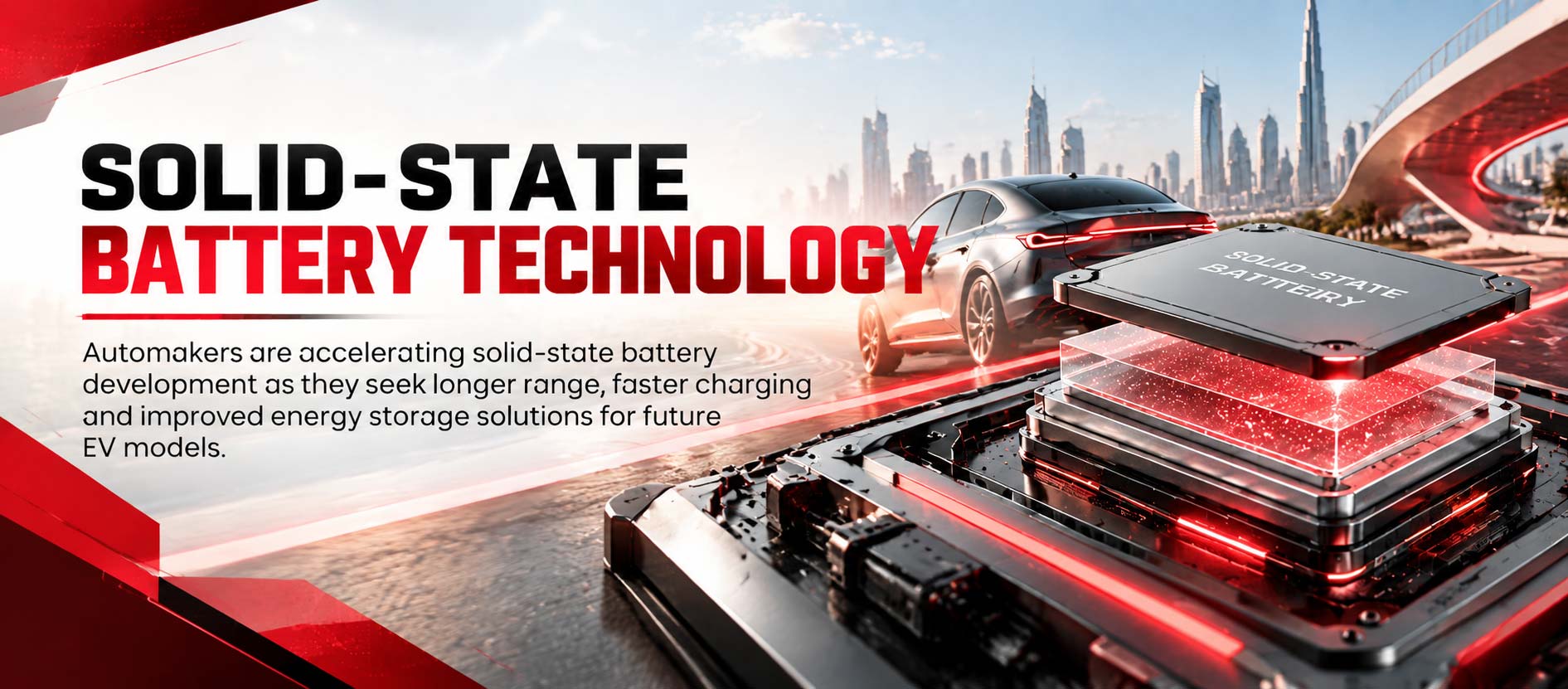
Automotive manufacturers and battery companies are continuing development of solid-state battery technology as a potential next-generation solution for electric vehicles.
The technology replaces the liquid electrolyte used in conventional lithium-ion batteries with a solid material, creating possibilities for higher energy density, improved safety characteristics and faster charging performance.
Although solid-state batteries are not yet widely available in passenger vehicles, continued research and pilot production programs indicate that they could become an important part of future electric mobility.
What Are Solid-State Batteries?
Solid-state batteries are rechargeable batteries that use a solid electrolyte instead of the liquid electrolyte found in most current lithium-ion batteries. The electrolyte is the component that allows ions to move between the battery’s positive and negative electrodes during charging and discharging. By changing this internal structure, engineers aim to create batteries that can store more energy while reducing some limitations of existing battery systems.
How Are Solid-State Batteries Different From Lithium-Ion Batteries?
Traditional lithium-ion batteries currently power most electric vehicles.
Solid-state batteries are being researched because they may offer several potential advantages:
| Feature | Lithium-Ion Battery | Solid-State Battery |
| Electrolyte | Liquid electrolyte | Solid electrolyte |
| Energy density | Current industry standard | Potentially higher |
| Charging speed | Improving with new technologies | Potential for faster charging |
| Safety characteristics | Mature technology | Potential improvements |
| Commercial availability | Widely available | Still under development |
However, solid-state technology also faces challenges, including manufacturing complexity, production costs and long-term durability validation.
Why Are Automakers Investing in Solid-State Batteries?
Electric vehicle manufacturers are looking for battery improvements because battery performance directly affects:
- Driving range
- Charging time
- Vehicle weight
- Production cost
- Customer adoption
A battery that stores more energy in a smaller and lighter package could allow manufacturers to design EVs with improved range without significantly increasing vehicle size. Companies including Toyota and Volkswagen-backed battery ventures have announced solid-state battery research programs aimed at future vehicle applications.
When Will Solid-State Batteries Be Available in Cars?
Solid-state battery timelines vary between manufacturers. Several automotive companies have announced plans for pilot production and future vehicle testing, but widespread commercial availability remains dependent on solving manufacturing and cost challenges.
At present, solid-state batteries should be considered an emerging technology rather than a replacement already available for most EV owners.
Why Does This Matter for UAE Electric Vehicle Owners?
The UAE is expanding electric mobility through:
- EV charging infrastructure
- Government sustainability programs
- Increasing availability of electric vehicle models
- Smart transportation initiatives
Future battery improvements could influence UAE motorists through:
- Longer driving ranges in hot-weather conditions
- Reduced charging times
- Improved vehicle efficiency
- Changes in EV ownership costs
However, battery performance in the UAE also depends on factors such as climate conditions, charging habits, vehicle design and battery-management systems.
How Could Solid-State Batteries Affect Battery Services?
As automotive technology develops, vehicle service requirements will also change.
Future battery-related services may include:
- Advanced battery health diagnostics
- EV battery monitoring
- High-voltage system maintenance
- Battery lifecycle management
Traditional 12-volt vehicle batteries and EV traction batteries are different systems and require different safety procedures. The growth of new battery technologies will increase the importance of specialized automotive knowledge across the service industry.
Frequently Asked Questions
What is a solid-state battery?
A solid-state battery is a rechargeable battery that uses a solid electrolyte instead of the liquid electrolyte found in conventional lithium-ion batteries.
Are solid-state batteries better than lithium-ion batteries?
Solid-state batteries have potential advantages, including higher energy density and improved charging performance, but they are still being developed for large-scale vehicle use.
Are solid-state batteries available in UAE cars?
Currently, most electric vehicles sold in the UAE use lithium-ion battery technology. Solid-state battery vehicles are still expected to arrive after further development and commercial testing.
Will solid-state batteries increase EV range?
They have the potential to increase range because they may store more energy in a smaller battery package, but final performance depends on commercial vehicle designs.
UAE Relevance: The Future of Vehicle Battery Technology
Battery technology will remain one of the most important factors shaping electric mobility. For UAE drivers, future developments in battery chemistry could influence vehicle choices, charging requirements and ownership costs.
As manufacturers continue testing next-generation batteries, the automotive industry is moving toward a future where multiple battery technologies may serve different vehicle categories and applications.
What Happens Next?
The next stage for solid-state batteries will focus on:
- Large-scale manufacturing
- Long-term reliability testing
- Cost reduction
- Vehicle integration
If manufacturers successfully overcome production challenges, solid-state batteries could become a major technology shift in the electric vehicle market.
SOURCES
- International Energy Agency (IEA) — Battery technology and electric mobility research
- Toyota Motor Corporation — Solid-state battery development announcements
- Volkswagen Group — Battery technology strategy updates
- U.S. Department of Energy — Battery research and technology information