
What Does a Car Alternator Do?
The alternator is a key component of your vehicle’s charging system. While the engine is running, it converts mechanical energy into electrical power to keep the battery charged and operate the vehicle’s electrical systems.
Its main functions include:
- Recharging the car battery
- Powering the headlights and interior lights
- Running the air conditioning system
- Supporting dashboard electronics and controls
- Supplying power to the infotainment system
- Supporting electric or electronic power steering in many vehicles
- Sustaining a stable electrical voltage
When the alternator stops working, the battery becomes the primary source of electrical power. Since the battery has limited capacity, it can eventually run out of charge, leaving the vehicle unable to start. If this happens while you are on the road, roadside assistance service can help with services such as battery testing, jump-start assistance, or battery replacement.
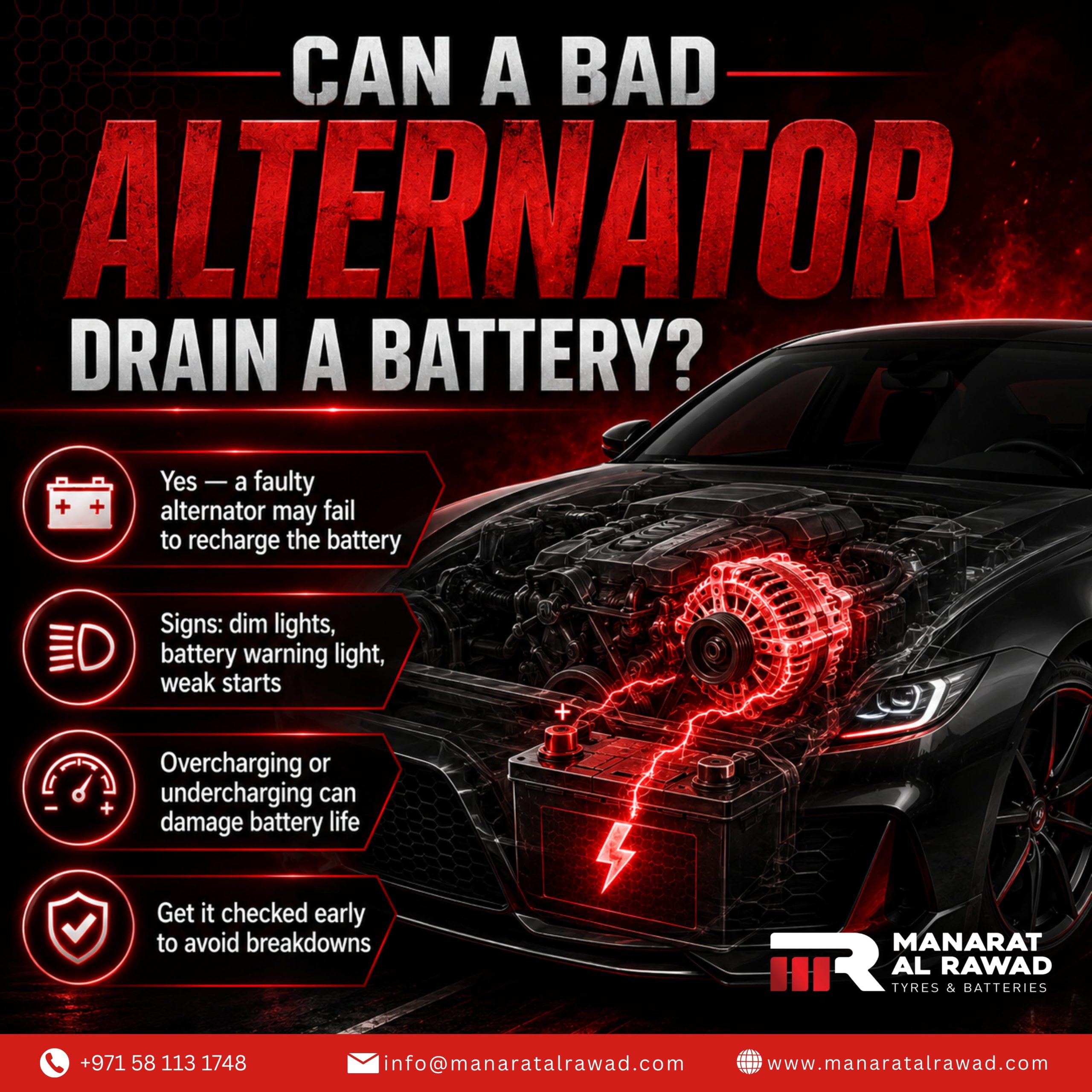
Can a Bad Alternator Drain a Battery?
- The battery is not receiving enough charge.
- Electrical accessories rely heavily on the battery.
- Battery voltage continues to drop.
- The vehicle may eventually stall or fail to start.
How the Alternator and Battery Work Together
| Battery | Starts the engine and powers electronics before the engine runs |
| Alternator | Recharges the battery and powers electrical systems while driving |
| Voltage Regulator | Maintains proper charging voltage |
| Serpentine Belt | Spins the alternator pulley |
Common Symptoms of a Bad Alternator
- Battery warning light stays on
- Dim headlights
- Flickering interior lights
- Slow engine crank
- Weak air conditioning blower
- Power windows operate slowly
- Electrical accessories malfunction
- Burning rubber smell
- Whining or grinding noises
- Frequent dead battery
Signs Your Battery Is Being Drained
A battery that is losing charge will often show several warning signs before it completely fails. Noticing these symptoms early can help identify whether the issue is with the battery, alternator, or another part of the vehicle’s electrical system.
Common Battery Drain Symptoms
- The engine cranks slowly or struggles to start
- You hear clicking when turning the key or pressing the start button
- Headlights or dashboard lights become noticeably dim
- The vehicle clock repeatedly resets
- Radio or infotainment settings are lost
- The car needs frequent jump starts
- The engine may stall while driving
If these problems continue, avoid assuming that you simply need a Mobile car battery replacement. A battery test and alternator inspection can help identify the actual cause. Replacing the battery without addressing a faulty charging system may result in the new battery draining again.
Common Causes of Alternator Failure
Mechanical Causes
- Worn bearings
- Damaged rotor
- Broken stator windings
- Loose pulley
Electrical Causes
- Failed voltage regulator
- Blown diodes
- Loose wiring
- Corroded battery terminals
Environmental Aspects
How to Diagnose an Alternator Problem
Step 1
Step 2
Step 3
Measure battery voltage. Typical readings:
| Engine Off | 12.4–12.7 V |
| Engine Running | 13.8–14.7 V |
Alternator vs. Battery Problems
| Car won’t start | ✔ | ✔ |
| Battery warning light | ✘ | ✔ |
| Dim headlights while driving | ✘ | ✔ |
| Needs frequent jump starts | ✔ | ✔ |
| Vehicle stalls after starting | ✘ | ✔ |
| Battery fails repeatedly | Sometimes | Very Common |
Can You Drive with a Bad Alternator?
Preventing Alternator Failure
- Inspect the drive belt regularly.
- Keep battery terminals clean and tight.
- Test the charging system during routine servicing.
- Avoid overloading the electrical system with unnecessary accessories.
- Replace worn components before they fail.
- Have the battery and alternator checked before long road trips.
When to Call Roadside Assistance
If your vehicle refuses to start, stalls unexpectedly, or needs frequent jump starts, calling professional roadside assistance can be the safest and quickest solution. Manarat Al Rawad provides 24/7 roadside support across the UAE, including car battery jump-starts, battery testing, and car battery replacement services across United Arab Emirates. A qualified technician can inspect the battery and charging system at your location to determine whether the problem is caused by a weak battery, faulty alternator, or another electrical component.
A malfunctioning alternator can drain your battery by failing to recharge it properly while the engine is running. In some cases, an internal alternator fault can also create an electrical drain after the vehicle is switched off. Warning signs such as dim headlights, repeated jump starts, slow engine cranking, or a battery warning light should not be ignored.
If you experience charging system issues in Dubai or anywhere in the UAE, professional battery and alternator testing can help identify the underlying problem. Whether you need a battery inspection, car battery jump-start, or car battery replacement in Dubai, prompt assistance can help minimize downtime and get you safely back on the road.
Frequently Asked Questions (FAQs)
1. Can a bad alternator drain a battery overnight?
2. How do I know if my battery or alternator is bad?
3. Can jump-starting fix an alternator problem?
4. What is the average lifespan of an alternator?
5. Can a weak alternator damage a new battery?
6. Why does my battery keep dying after replacement?
- A failing alternator
- A parasitic electrical drain
- Loose or corroded battery terminals
- A damaged serpentine belt
- Faulty wiring
7. Is it safe to drive with the battery warning light on?
8. How can UAE summer heat affect the alternator?
9. When should I call roadside assistance?
- Your vehicle won’t start.
- You need repeated jump starts.
- The engine stalls unexpectedly.
- The battery warning light is on.
- Electrical systems begin failing while driving.