
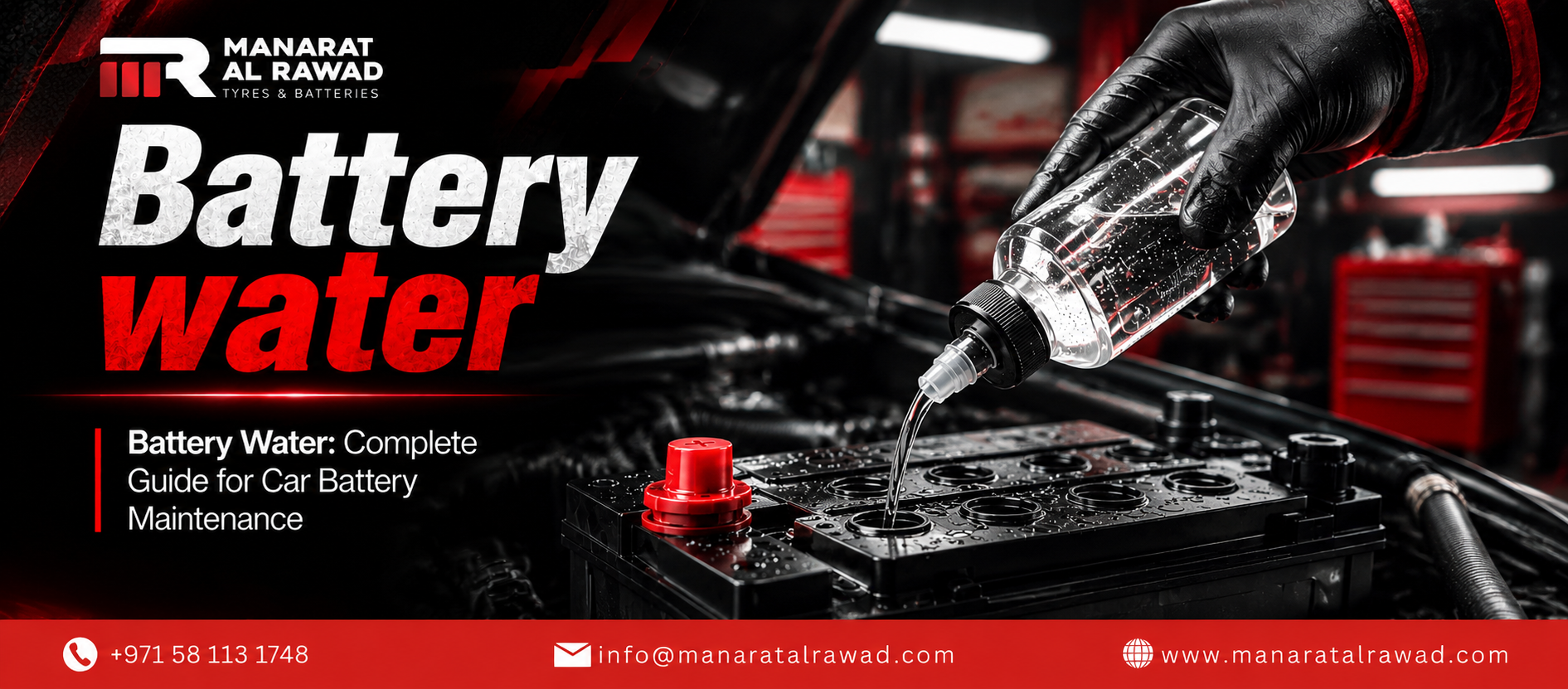
Many drivers believe that adding car battery water is the solution whenever a car battery starts showing signs of weakness. While battery water plays an important role in some battery types, not every vehicle battery requires refilling. In fact, adding the wrong type of water to the wrong type of battery can reduce performance and even shorten the battery’s lifespan.
Understanding how battery water works, when it should be checked, and how it influences overall battery condition can help prevent unforeseen breakdowns and expensive replacements. Whether you’re maintaining a traditional lead-acid battery or driving a modern vehicle with a maintenance-free battery, knowing the facts allows you to make well-informed decisions.
This guide explains everything you need to know about battery water, battery maintenance, car Battery life check, and how to determine your car battery life using practical methods and tools, such as a car Battery life calculator.
What Is Battery Water?
Battery water is the liquid inside traditional lead-acid batteries that supports the chemical reaction between lead plates and sulfuric acid. During charging and discharging, water naturally evaporates over time, notably in hot climates.
Contrary to popular belief, battery water is not ordinary tap water. Only distilled water should be used because it does not contain minerals that can damage battery plates.
The electrolyte inside a lead-acid battery consists of:
- Sulfuric acid
- Distilled water
Keeping the correct electrolyte level helps the battery produce consistent electrical power and improves overall performance.
Do All Car Batteries Need Battery Water?
No. Modern automobiles often use maintenance-free, completely sealed batteries. These batteries are designed to last throughout their service life without requiring additional water. Battery water is only required in conventional flooded lead-acid batteries. If you’re unsure which type your vehicle uses, consult your owner’s manual or ask a qualified technician before opening the battery.
Why Does Battery Water Level Drop?
Multiple factors contribute to water loss within a battery.
- High Temperatures – Extreme heat increases evaporation, causing battery water levels to fall faster.
- Overcharging – A faulty alternator can overcharge the battery, causing excessive water loss.
- Repeated Charging Cycles – Vehicles used for short trips or heavy electrical loads may undergo increased battery stress.
- Battery Age – Older batteries naturally lose water more quickly due to wear and chemical degradation.
Can You Use Tap Water?
No. Tap water contains minerals such as calcium, magnesium, and iron. These foreign particles can accumulate on the battery plates, lowering efficiency and shortening battery life.
Always use:
✔ Distilled water
Never use:
- Tap water
- Mineral water
- Filtered drinking water
- Bottled water
Using distilled water protects the battery’s internal components and supports maximum performance.
How to Check Battery Water Safely
If your battery is a serviceable flooded battery, follow these steps:
1 Step: Turn Off the Engine
- Allow the battery to cool before inspection.
2 Step: Wear Protective Equipment
- Battery acid can be hazardous. Wear gloves and safety glasses.
3 Step: Open the Battery Caps
- Remove each cap carefully to inspect the electrolyte level.
4 Step: Check the Fluid Level
- The liquid should cover the lead plates completely without overfilling.
5 Step: Add Distilled Water if Needed
- Fill only to the recommended level. Overfilling can cause acid overflow during charging.
6 Step: Secure the Caps
- Ensure every cap is tightly sealed before driving.
Signs Your Battery Needs Attention
Battery water alone cannot solve every battery problem. Watch for these warning signs:
- Slow engine starting
- Battery warning light
- Dim headlights
- Clicking sound during ignition
- Frequent jump starts
- Swollen battery case
- Corroded battery terminals
- Electrical system malfunctions
If these symptoms persist after checking the battery, professional testing is recommended.
How Heat Affects Battery Water
Drivers in hot regions encounter unique battery challenges. High temperatures speed up:
- Water evaporation
- Internal corrosion
- Plate damage
- Electrolyte imbalance
- Battery aging
In climates like the UAE, batteries often wear out faster than in cooler regions. Periodic inspections become even more important during the summer months.
What Is a Car Battery Life Check?
A car Battery life check evaluates the battery’s overall condition via specialized testing equipment. Professional battery testing measures:
- Battery voltage
- Cold Cranking Amps (CCA)
- Charging efficiency
- Internal resistance
- State of health
Unlike a visual inspection, a battery life check provides accurate information on remaining battery performance and assists in identifying potential failures before they occur. Experts recommend checking battery life at least twice a year, especially before long trips or during extreme weather seasons.
Can a Car Battery Life Calculator Predict Battery Condition?
A car Battery life calculator is an online tool that estimates the remaining time for car battery service and lifespan of your battery based on information such as:
- Battery age
- Climate
- Driving habits
- Daily mileage
- Battery type
- Maintenance history
While these calculators offer useful estimates, they cannot replace professional diagnostic testing. Use a battery life calculator as a planning tool rather than a final diagnosis.
What Determines Battery Life in a Car?
Many drivers ask about Battery life in a car and how long a battery should last. Numerous factors influence battery durability.
Climate
- Hot weather greatly reduces battery lifespan.
Driving Habits
- Frequent short trips prevent the battery from fully charging.
Electrical Accessories
- Heavy use of air conditioning, entertainment systems, and additional electronics increases battery load.
Battery Quality
- Premium batteries generally provide better durability and longer warranties.
Maintenance
- Periodic inspections, terminal cleaning, and battery testing help maximize service life.
- Most vehicle batteries last between 2 and 4 years, depending on these factors.
Common Battery Water Myths
1 Myth: Every Battery Needs Water
- False. Maintenance-free batteries do not require water.
2 Myth: Any Water Is Fine
- False. Only distilled water should be used.
3 Myth: Adding Water Fixes Every Battery
- False. Water only restores electrolyte levels. It cannot repair damaged battery cells.
4 Myth: Low Water Means the Battery Is Dead
- Not always. A professional inspection is needed before deciding on replacement.
Tips to Extend Car Battery Life
Proper maintenance could considerably improve battery performance. Follow these best practices:
- Perform regular car Battery life check inspections.
- Use a trusted car Battery life calculator to monitor battery age.
- Keep battery terminals clean.
- Drive regularly to maintain charge.
- Turn off lights and accessories before leaving the vehicle.
- Avoid unnecessary short trips whenever possible.
- Replace aging batteries before complete failure.
- Schedule annual battery testing with professionals.
Understanding battery water is necessary for preserving reliable vehicle performance. While not every battery requires water, knowing your battery type, checking electrolyte levels when appropriate, and using only distilled water can help extend battery life.
Combining routine maintenance with regular car Battery life check inspections and using a car Battery life calculator to monitor battery age allows drivers to detect problems early and avert unforeseen breakdowns.
If your battery shows signs of weakness despite proper maintenance, professional testing and scheduled replacement are the safest ways to ensure dependable performance. A healthy battery means reliable starts, better electrical performance, and greater reassurance with each time you drive.