
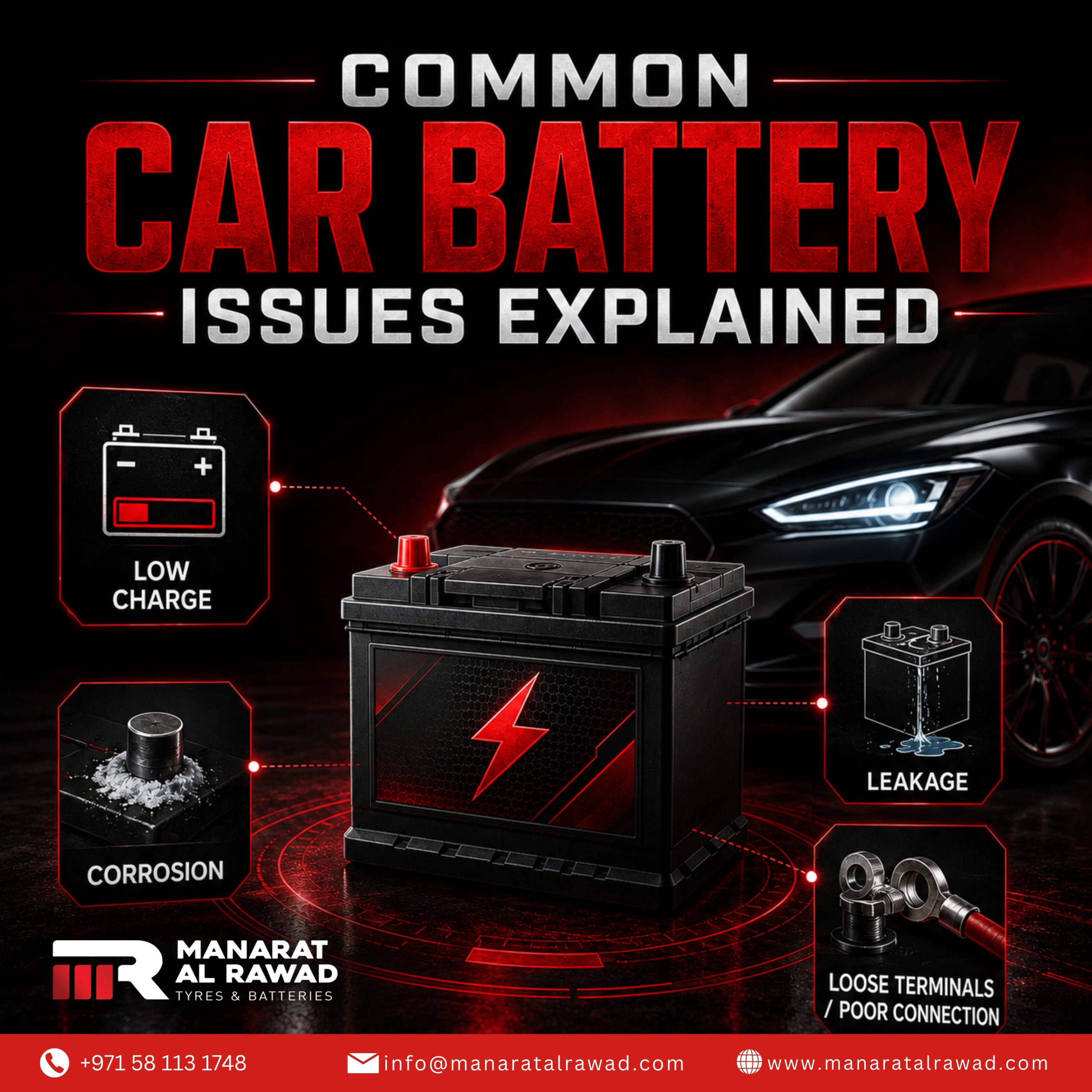
تُعد سلامة بطارية السيارة أمراً بالغ الأهمية لضمان أداء موثوق للمركبة. وسواء كنت تقود سيارتك إلى العمل، أو تنطلق في رحلة عائلية، أو تتنقل يومياً بين دبي وأبوظبي والشارقة وعجمان، فإن البطارية هي التي تمد نظام تشغيل المحرك بالطاقة وتدعم كافة المكونات الكهربائية الرئيسية في مركبتك. وعندما تبدأ البطارية في التلف، فإنها غالباً ما تظهر علامات تحذيرية قبل تعطلها تماماً؛ ومعرفة هذه... المشاكل الفنية لبطارية السيارة يمكن أن يساعدك ذلك في تجنب الأعطال غير المتوقعة، وتقليل تكاليف الإصلاح، وتعزيز موثوقية مركبتك.
يعتقد العديد من السائقين أن البطارية تتوقف عن العمل فجأة ودون سابق إنذار، إلا أن هذا الأمر نادراً ما يحدث؛ فغالباً ما تشير علامات مثل بطء دوران المحرك، وضعف إضاءة المصابيح الأمامية، والأعطال الكهربائية، وظهور أضواء التحذير في لوحة القيادة، إلى أن البطارية أو نظام الشحن بحاجة إلى فحص وصيانة.
يوضح هذا الدليل أكثر مشاكل بطاريات السيارات شيوعاً وأسبابها وطرق تشخيصها، بالإضافة إلى نصائح عملية للصيانة تضمن استمرار عمل سيارتك بكفاءة في ظل الظروف المناخية القاسية في دولة الإمارات.
مشاكل بطارية السيارة الشائعة وأسبابها وحلولها
| مشكلة في بطارية السيارة | سبب محتمل | الحل الموصى به |
| المحرك لا يعمل | بطارية فارغة أو مُفرغة الشحنة | اختبار البطارية واستبدالها |
| بطء تشغيل المحرك | بطارية ضعيفة | فحص احترافي لصحة البطارية |
| مصباح تحذير البطارية | مشكلة في نظام الشحن | افحص المولد والبطارية. |
| أطراف بطارية متآكلة | تراكم الرطوبة والحمض | نظّف الأطراف وافحص التوصيلات. |
| تنفد البطارية أثناء الليل | تسريب كهربائي طفيلي | تشخيص النظام الكهربائي |
| غلاف بطارية منتفخ | التعرض المفرط للحرارة | استبدل البطارية فوراً |
| المصابيح الأمامية الخافتة | بطارية أو مولد كهرباء (دينامو) ضعيف | اختبار البطارية ونظام الشحن |
| تشغيل السيارة بالبطارية بشكل متكرر | البطارية تقترب من نهاية عمرها الافتراضي | قم بتركيب بطارية جديدة |
ما هي مشاكل بطارية السيارة؟
Car battery issues refer to problems that prevent the battery from storing or delivering sufficient electrical power to start the engine and operate the vehicle’s electrical systems.
قد تنجم هذه المشكلات عن:
- تقادم البطارية
- درجات حرارة قصوى
- أعطال نظام الشحن
- تسريبات كهربائية
- أطراف تآكلت
- عيوب التصنيع
- سوء الصيانة
إن تحديد هذه المشكلات مبكراً يقلل من احتمالية حدوث أمور غير متوقعة. أعطال المركباتتشمل مشاكل البطارية الأكثر شيوعاً ما يلي:
1. بطارية فارغة
تُعد البطارية الفارغة تماماً من الأسباب الرئيسية لتعطل المركبات.
تشمل الأسباب الشائعة ما يلي:
- ترك المصابيح الأمامية مضاءة
- أضواء المقصورة تظل مضاءة.
- فترات طويلة دون قيادة
- عمر البطارية
- نظام شحن معطل
يمكن لاختبار البطارية الاحترافي تحديد ما إذا كانت البطارية بحاجة إلى إعادة شحن أو استبدال.
2. بطء دوران المحرك عند التشغيل
إذا كان المحرك يدور ببطء قبل التشغيل، فقد تكون البطارية لم تعد توفر طاقة كافية لبدء التشغيل.
تشمل الأسباب المحتملة:
- بطارية متقادمة
- تلف البطارية الداخلية
- مستوى شحن منخفض
- انخفاض تيار التدوير على البارد (CCA)
غالباً ما يؤدي تجاهل بطء التشغيل إلى تعطل البطارية تماماً.
3. مصباح تحذير البطارية
لا يشير ضوء تحذير البطارية دائمًا إلى وجود خلل في البطارية.
قد يشير ذلك أيضاً إلى مشاكل تتعلق بـ:
- مُولِّد التيار المتردد
- منظم الجهد
- حزام الإدارة
- أسلاك نظام الشحن
يساعد التشخيص المهني في تحديد السبب الدقيق.
4. أطراف البطارية المتآكلة
تُقلل الرواسب البيضاء أو الزرقاء أو الخضراء المتكونة حول أقطاب البطارية من الموصلية الكهربائية.
قد يتسبب التآكل في:
- صعوبة في التشغيل
- فقدان الجهد
- شحن ضعيف
- أعطال كهربائية متقطعة
يؤدي تنظيف الأقطاب بانتظام إلى تحسين أداء البطارية.
لماذا تستمر بطارية سيارتي في النفاد؟
تكرار تعطل البطارية غالباً ما يشير ذلك إلى مشكلة كامنة، وليس مجرد بطارية قديمة.
تشمل الأسباب المحتملة:
مولد كهرباء تالف
- يقوم المولد بشحن البطارية أثناء عمل المحرك.
- في حال تعطلها، تفقد البطارية شحنتها تدريجياً حتى تعجز المركبة عن التشغيل.
استنزاف طاقة البطارية (تسريب التيار)
قد تستمر بعض المكونات الكهربائية في استهلاك الطاقة بعد إيقاف تشغيل المحرك.
تشمل الأمثلة:
- الإضاءة الداخلية
- مرحلات معطلة
- أنظمة الإنذار
- كاميرات لوحة القيادة
- وحدات المعلومات والترفيه
تساعد عمليات التشخيص الكهربائي في تحديد مواقع عمليات استنزاف الطاقة الخفية هذه.
عمر البطارية
- حتى البطاريات عالية الجودة تصل في النهاية إلى نهاية عمرها الافتراضي.
- في ظروف الإمارات العربية المتحدة، تعمل معظم البطاريات بشكل موثوق لمدة تقريبية 2–3 سنوات.
- تفقد البطاريات القديمة قدرتها على الشحن وتصبح أقل موثوقية في الطقس الحار.
كيف يؤثر طقس الإمارات على بطاريات السيارات؟
تُعدّ الحرارة الشديدة أحد أكبر العوامل المساهمة في سيارة بطارية مشاكل.
تُسرِّع درجات الحرارة المرتفعة من:
- تبخّر الإلكتروليت
- تآكل داخلي
- تدهور الألواح
- انخفاض العمر الافتراضي للبطارية
على عكس المناطق الباردة، حيث تؤثر درجات الحرارة المتجمدة على أداء البطارية، يواجه سائقو الإمارات العربية المتحدة في المقام الأول مشكلة تدهور البطارية الناتج عن الحرارة. ويمكن لركن السيارة في أماكن مظللة وإجراء فحوصات دورية للبطارية أن يحسّن بشكل ملحوظ من عمرها الافتراضي.
هل يمكن للحرارة أن تتلف بطارية السيارة؟
نعم، إذ يُشكّل التعرض المستمر لدرجات حرارة تتجاوز 40 درجة مئوية عبئاً كبيراً على بطاريات السيارات؛ فالحرارة تسرّع التفاعلات الكيميائية داخل البطارية، مما يؤدي إلى تآكلها بشكل أسرع وتقليص عمرها الافتراضي. لذا، ينبغي للسائقين فحص البطاريات بوتيرة أكبر خلال فصل الصيف، واستبدال البطاريات المتهالكة قبل أن تتعطل تماماً.
علامات تشير إلى أن بطاريتك بحاجة إلى اهتمام فوري
قد تحتاج مركبتك إلى فحص احترافي إذا لاحظت:
- صوت طقطقة أثناء التشغيل
- ضوء تحذير البطارية في لوحة القيادة
- المصابيح الأمامية الخافتة
- الملحقات الكهربائية تعمل ببطء
- انتفاخ البطارية
- رائحة احتراق
- تشغيل السيارة بالبطارية بشكل متكرر
- صعوبة في التشغيل بعد ركن السيارة
قد يؤدي تجاهل علامات التحذير هذه إلى تركك عالقاً بشكل غير متوقع.
الوقاية من مشاكل بطارية السيارة الشائعة
تُعد الصيانة الدورية أفضل وسيلة لتجنب المشاكل المتعلقة بالبطارية.
تشمل التدابير الوقائية البسيطة ما يلي:
- افحص أقطاب البطارية بانتظام.
- Clean corrosion immediately.
- قُد مركبتك بأسلوب ثابت.
- أطفئ الملحقات الكهربائية قبل مغادرة السيارة.
- اختبر البطارية كل ستة أشهر.
- استبدل البطاريات القديمة قبل أن تتعطل.
تُعد الصيانة الوقائية دائماً أقل تكلفة من الإصلاحات الطارئة أو الأعطال التي تحدث على الطريق.
كيف يتم تشخيص مشاكل بطارية السيارة؟
يتطلب تشخيص مشاكل بطارية السيارة أكثر من مجرد التحقق مما إذا كان المحرك يعمل؛ إذ يساعد الفحص الاحترافي في تحديد ما إذا كان الخلل ناتجاً عن البطارية، أو المولد (الدينامو)، أو بادئ التشغيل (السلف)، أو أي مكون كهربائي آخر.
عادةً ما يقوم الفنيون ذوو الخبرة بما يلي:
- اختبار جهد البطارية
- اختبار أمبير التدوير على البارد (CCA)
- اختبار حمل البطارية
- اختبار شحن المولد
- فحص محرك بادئ التشغيل
- فحص الأطراف والكابلات
- اختبار استنزاف التيار الطفيلي
توفر هذه الاختبارات صورة شاملة للنظام الكهربائي في مركبتك، وتساعد في تحديد السبب الجذري للمشكلة قبل استبدال أي مكونات دون داعٍ.
كيف أعرف ما إذا كانت بطارية سيارتي بحاجة إلى استبدال؟
غالباً ما تُظهر البطارية التي تقترب من نهاية عمرها الافتراضي عدة علامات تحذيرية قبل أن تتعطل تماماً.
انتبه إلى:
بطء تشغيل المحرك – إذا كان المحرك يدور ببطء أكثر من المعتاد، فقد تكون البطارية لم تعد توفر طاقة كافية للتشغيل.
ضوء تحذير البطارية في لوحة القيادة – لا يشير ضوء التحذير دائمًا إلى تعطل البطارية، ولكنه لا ينبغي تجاهله أبدًا.
انتفاخ غلاف البطارية – يمكن أن تؤدي درجات الحرارة المرتفعة إلى تمدد غلاف البطارية، مما يشير إلى وجود تلف داخلي.
تشغيل السيارة بالبطارية بشكل متكرر – تكرار الحاجة إلى تشغيل السيارة عبر توصيلها ببطارية خارجية (Jump-start) يُعد أحد أوضح المؤشرات على الأرجحية الكبيرة للحاجة إلى استبدال البطارية.
مشاكل كهربائية – قد تتسبب البطاريات الضعيفة في:
- المصابيح الأمامية الخافتة
- نوافذ كهربائية بطيئة الحركة
- أضواء لوحة القيادة تومض
- إعادة ضبط نظام المعلومات والترفيه
- مشاكل مروحة نظام التكييف
اختيار البطارية البديلة المناسبة
عند استبدال البطارية، يُعد اختيار الطراز الصحيح أمراً بالغ الأهمية لضمان أداء موثوق.
ضع في اعتبارك ما يلي:
سعة البطارية (أمبير-ساعة)
- اختر بطارية ذات تصنيف أمبير-ساعة (Ah) يوصي به مُصنِّع مركبتك.
أمبيرات بدء التشغيل البارد (CCA)
- يقيس تصنيف CCA قدرة البطارية على تشغيل المحرك في الظروف القاسية.
- توفر تصنيفات CCA الأعلى عموماً أداءً أقوى عند بدء التشغيل.
تكنولوجيا البطاريات
تشمل الخيارات الشائعة:
- بطاريات الرصاص الحمضية التقليدية
- بطاريات الرصاص الحمضية المحسنة (EFB)
- بطاريات حصيرة الألياف الزجاجية الماصة (AGM)
Modern vehicles built with advanced electrical systems regularly require AGM or EFB batteries.
ضمان
- يوفر الضمان المدعوم من الشركة المصنعة ثقةً إضافيةً وقيمةً طويلة الأمد.
قائمة التحقق الخاصة بصيانة البطارية
قد يؤدي اتباع إجراءات صيانة بسيطة إلى تقليل احتمالية تعطل البطارية بشكل غير متوقع إلى حد كبير.
| مهمة صيانة | التكرار الموصى به |
| افحص أقطاب البطارية | Monthly |
| افحص علبة البطارية | Monthly |
| اختبر جهد البطارية | كل 6 أشهر |
| اختبار احترافي لصحة البطارية | كل 6 إلى 12 شهراً |
| افحص نظام الشحن | أثناء الصيانة الدورية |
| استبدل البطارية القديمة | كل سنتين إلى 3 سنوات (في ظروف دولة الإمارات) |
تكتسي عمليات الفحص الدوري أهمية خاصة في دولة الإمارات، حيث تؤدي درجات الحرارة المرتفعة إلى تسريع تآكل البطارية.
هل يمكنني الوقاية من مشاكل بطارية السيارة؟
على الرغم من أن كل بطارية تصل في النهاية إلى نهاية عمرها الافتراضي، إلا أن الصيانة السليمة يمكن أن تقلل بشكل كبير من احتمالية حدوث أعطال مفاجئة.
إليك بعض النصائح العملية:
- قُد بانتظام – قد تتعرض بطاريات المركبات التي تُترك دون استخدام لفترات طويلة للتفريغ.
- أوقف تشغيل الملحقات الكهربائية – قبل إيقاف تشغيل المحرك، تأكد من إطفاء المصابيح الأمامية وأضواء المقصورة وفصل أجهزة الشحن.
- أوقف سيارتك في المناطق المغطاة – يساعد تقليل التعرض المباشر لأشعة الشمس في الحد من تدهور البطارية الناجم عن الحرارة.
- حافظ على نظافة أقطاب البطارية – تعمل أطراف التوصيل النظيفة على تحسين التوصيل الكهربائي وكفاءة الشحن.
- جدولة اختبارات دورية للبطارية – يمكن للفحص المهني الكشف عن العلامات المبكرة للتدهور قبل أن تؤدي إلى تعطل المركبة على الطريق.
هل من الآمن تشغيل بطارية فارغة الشحن باستخدام وصلات المساعدة (Jump-start)؟
يمكن لعملية التشغيل باستخدام مصدر طاقة خارجي (Jump-starting) أن تعيد الطاقة مؤقتاً إلى البطارية الفارغة، ولكن يجب إجراؤها بحذر.
Before attempting a jump-start:
- افحص البطارية بحثاً عن أي تلف ظاهر.
- لا تحاول تشغيل السيارة بتوصيل البطارية ببطارية أخرى (Jump-start) إذا كانت البطارية منتفخة أو بها تسريب.
- استخدم كابلات توصيل عالية الجودة.
- اتبع التسلسل الصحيح لتوصيل الكابلات.
- أزِل الكابلات بترتيب عكسي بمجرد أن يبدأ المحرك في العمل.
إذا كانت البطارية تتطلب بشكل متكرر تشغيل (المحرك) باستخدام بطارية خارجية، يُنصح بإجراء فحص احترافي لتحديد ما إذا كان الاستبدال ضرورياً.
لماذا يُعد اختبار البطارية الاحترافي أمراً مهماً؟
تشبه العديد من المشاكل المتعلقة بالبطارية أعطال محرك التشغيل (السلف) أو المولد الكهربائي (الدينامو)؛ لذا فإن استبدال البطارية دون إجراء فحص دقيق قد لا يحل المشكلة الأساسية.
يستخدم الفنيون المحترفون معدات تشخيص متخصصة لتقييم:
- سعة البطارية
- كفاءة الشحن
- سلامة النظام الكهربائي
- الاستقرار الكهربائي
- سعة احتياطي البطارية
يُسهم التشخيص الدقيق في توفير الوقت، وتقليل النفقات غير الضرورية، وضمان إجراء الإصلاح الصحيح.
لماذا تختار منارة الرواد؟
في Manarat Al Rawadنحن ندرك تماماً مدى الإزعاج الذي قد تسببه مشاكل البطارية؛ لذا يقدم فنيونا ذوو الخبرة خدمات احترافية تشمل فحص البطارية، واستبدالها في موقعك، وتشغيل السيارة عند تعطل البطارية (Jump-start)، والمساعدة الطارئة على الطريق في جميع أنحاء دبي ودولة الإمارات العربية المتحدة.
عند اختيارك لـ "منارة الرواد"، فإنك تستفيد مما يلي:
- بطاريات سيارات أصلية
- اختبار احترافي لحالة البطارية
- استبدال البطارية في الموقع
- فحوصات نظام الشحن
- فنيو سيارات ذوو خبرة
- توصيات خدمات تتسم بالشفافية
- أوقات استجابة سريعة
- Warranty-backed battery solutions
لا ينصب تركيزنا على استبدال البطاريات فحسب، بل يمتد أيضاً إلى تحديد الأسباب الجذرية لأعطالها، لتتمكن من القيادة بثقة.
الأسئلة الشائعة
ما هي أكثر مشاكل بطاريات السيارات شيوعاً؟
تشمل المشكلات الشائعة تلف البطارية، وبطء دوران المحرك عند التشغيل، وتآكل أقطاب البطارية، وإضاءة مصابيح التحذير الخاصة بالبطارية، ونفاد شحن البطارية أثناء الليل، وأعطال نظام الشحن.
كم تدوم بطارية السيارة في الإمارات؟
نظراً للحرارة الشديدة، عادةً ما يتراوح العمر الافتراضي لمعظم بطاريات السيارات في دولة الإمارات بين عامين وثلاثة أعوام.
إذا كان مولد الكهرباء (الدينامو) في سيارتك تالفاً، هل ستعمل السيارة عن طريق توصيلها ببطارية خارجية (الاشتراك)؟
نعم، سيارة بها مولد كهرباء (دينامو) تالف قد يبدأ المحرك في العمل عند تشغيله باستخدام وصلات خارجية (Jump start)، لكنه قد لا يستمر في الدوران لفترة طويلة؛ فهذه العملية توفر طاقة مؤقتة من بطارية أخرى تتيح تشغيل المحرك، إلا أنه إذا كان المولد (الدينامو) عاجزاً عن إعادة شحن البطارية، فقد تتوقف السيارة عن العمل بمجرد نفاد الطاقة الكهربائية المتاحة. وإذا كانت سيارتك تحتاج باستمرار إلى التشغيل بهذه الطريقة، فينبغي فحص كل من البطارية ونظام الشحن (المولد) لتحديد المشكلة الفعلية.
كم مرة يجب أن أختبر بطاريتي؟
يُوصى باختبار البطارية كل ستة أشهر، ولا سيما قبل فصل الصيف وقبل الرحلات الطويلة بالسيارة.
هل تُعد عملية استبدال بطارية الهاتف المحمول موثوقة؟
نعم، تشمل خدمات استبدال بطاريات الهواتف المحمولة الاحترافية فحص البطارية، وتركيبها، وفحص نظام الشحن، ودعم الضمان، مما يجعلها خياراً مريحاً وموثوقاً.
يُعد فهم مشكلات بطارية السيارة من أفضل الطرق لتجنب الأعطال المفاجئة وعمليات الإصلاح المكلفة؛ فمن خلال الانتباه إلى العلامات التحذيرية المبكرة -مثل بطء دوران المحرك عند التشغيل، وضعف إضاءة المصابيح، وظهور مؤشرات تحذير البطارية، والحاجة المتكررة لتشغيل السيارة عبر توصيلها ببطارية خارجية- يمكنك معالجة المشكلات المحتملة قبل أن تتفاقم وتسبب متاعب كبيرة.
تُعد عمليات الفحص الدوري للبطارية، والصيانة السليمة، والاستبدال المجدول أموراً بالغة الأهمية لضمان أداء موثوق للمركبة، لا سيما في ظل الظروف المناخية القاسية في دولة الإمارات؛ إذ تساهم درجات الحرارة المرتفعة، والتنقل اليومي، والأحمال الكهربائية العالية في تآكل البطارية، مما يجعل العناية الوقائية أمراً أكثر أهمية.
سواء كنت تتنقل داخل دبي، أو تسافر إلى أبوظبي، أو تقود سيارتك عبر الشارقة، أو تزور مناطق أخرى في دولة الإمارات، فإن الحفاظ على سلامة البطارية يضمن لك تشغيلاً موثوقاً وراحة البال.
في Manarat Al Rawadنحن ملتزمون بمساعدة السائقين على مواصلة القيادة من خلال خدمات التشخيص الاحترافي للبطاريات، وتوفير بطاريات بديلة أصلية، وخدمات موثوقة. المساعدة على الطريقيجمع فريقنا المتمرس بين الخبرة الفنية والخدمة التي تضع العميل في صميم اهتماماتها، ليقدم حلولاً موثوقة في مجال السيارات، في الزمان والمكان اللذين تحتاجهما.