
BLOG
Battery Distilled Water: Everything You Need to Know
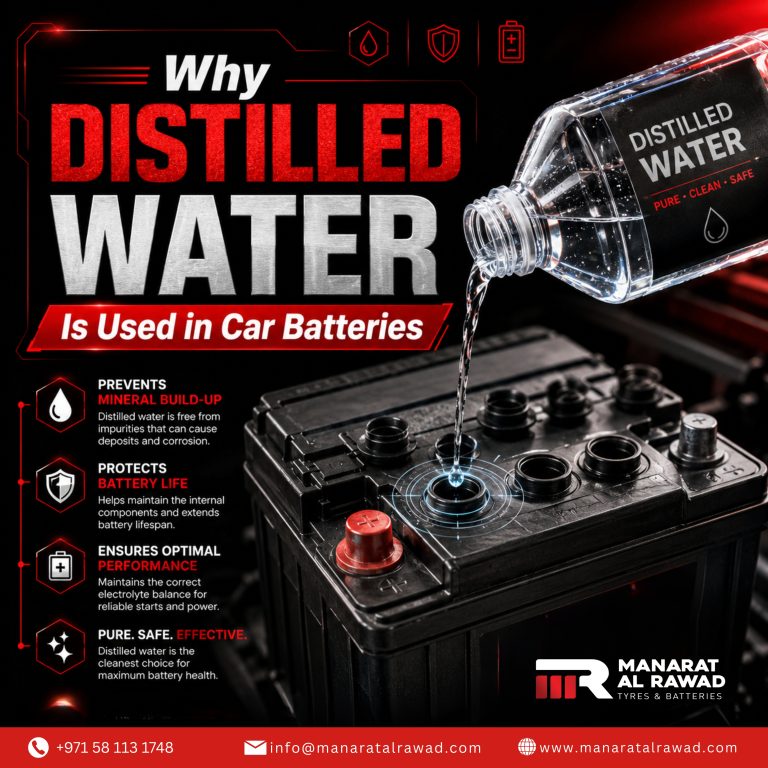
Battery Distilled Water: Complete Maintenance Guide
Your car battery is one of the most important components of your vehicle, providing the power needed to start the engine and operate electrical systems. While many modern batteries are maintenance-free, some conventional lead-acid batteries still require periodic inspection and refilling with battery distilled water to preserve maximum performance.
Using the correct type of water is essential. Many vehicle owners mistakenly top up their batteries with tap water or bottled drinking water, unaware that the contaminants and minerals in these water sources can damage the battery’s internal plates and reduce its lifespan.
Understanding when, why, and how to use distilled water for batteries can help improve battery performance, extend battery life, and reduce the risk of unexpected breakdowns—especially in the UAE, where high temperatures accelerate water loss through evaporation.
What Is Battery Distilled Water?
Battery water is purified water that has been produced through the distillation process, removing minerals, salts, metals, and other impurities commonly found in tap water.
Unlike ordinary water, distilled water contains virtually no dissolved minerals that could react with the battery’s electrolyte or damage the lead plates inside the battery.
It is specifically recommended for serviceable flooded lead-acid batteries when the electrolyte level drops below the recommended level.
Why Is Distilled Water Used in Car Batteries?
Inside a conventional lead-acid battery is an electrolyte solution containing sulfuric acid and water. During normal charging and discharging cycles, some of the water naturally evaporates or is lost through electrolysis, particularly in hot climates.
Replacing this lost water with distilled water helps:
- Maintain the correct electrolyte level.
- Protect the lead plates from exposure.
- Improve battery effectiveness
- Reduce internal damage
- Extend battery lifespan
- Support consistent starting performance.
Adding the correct water at the right time helps keep the battery functioning as intended.
Can I Use Tap Water Instead of Distilled Water?
No. Tap water should not be used in a car battery.
Tap water often contains:
- Calcium
- Magnesium
- Iron
- Chlorine
- Sodium
- Other dissolved minerals
These impurities may accumulate inside the battery, causing:
- Reduced charging efficiency
- Sulfation of battery plates
- Corrosion
- Shortened battery life
- Lower overall performance
Distilled water is free from these contaminants, making it the safest option for flooded batteries.
Battery Distilled Water vs Tap Water
| Feature | Distilled Water | Tap Water |
| Mineral Content | Very low | High |
| Safe for Lead-Acid Batteries | ✅ Yes | ❌ No |
| Prevents Plate Damage | ✅ Yes | ❌ No |
| Improves Battery Life | ✅ Yes | Limited |
| Recommended by Manufacturers | ✅ Yes | ❌ No |
Which Batteries Need Distilled Water?
Not every automotive battery requires water refilling.
Batteries That May Need Distilled Water
- Conventional flooded lead-acid batteries
- Serviceable automotive batteries
- Some commercial vehicle batteries
- Older vehicle batteries with removable caps
Batteries That Do Not Need Distilled Water
- AGM (Absorbent Glass Mat) batteries
- EFB (Enhanced Flooded Battery) maintenance-free models
- Gel batteries
- Sealed maintenance-free batteries
Attempting to open a sealed battery can damage it and may void the manufacturer’s warranty.
How to Check the Battery Water Level
If your battery has removable caps, checking the electrolyte level is fairly simple.
- Park the vehicle on a level surface.
- Switch off the engine and allow the battery to cool.
- Wear protective gloves and safety glasses.
- Carefully remove the battery caps.
- Check that the electrolyte covers the lead plates.
- If the level is low, add only distilled water until it reaches the recommended level.
- Replace the caps securely.
Do not overfill the battery, as the electrolyte expands during charging and may overflow.
How Often Should You Add Distilled Water to a Battery?
There is no universal schedule because water loss depends on:
- Climate
- Driving habits
- Battery age
- Charging system condition
- Battery type
In hot regions such as the UAE, drivers with serviceable batteries should inspect the electrolyte level approximately every 2–3 months, especially during summer.
Periodic inspections help prevent the lead plates from becoming exposed, which can permanently reduce battery capacity.
Signs Your Battery May Need Distilled Water
Some typical indicators include:
- Low electrolyte level visible through battery caps
- Slow engine cranking
- Reduced battery performance
- Repeated charging requirements
- Battery overheating
- Difficulty starting after short periods of parking
If the electrolyte level repeatedly drops, the charging system should also be inspected to rule out overcharging or other electrical issues.
How to Add Distilled Water to a Car Battery Safely
Adding distilled water to a battery is a straightforward maintenance task, but it should be done carefully to avoid damaging the battery or exposing yourself to battery acid.
Follow these steps:
1. Turn Off the Engine
Switch off the engine, remove the key, and allow the battery to cool before opening the battery caps.
2. Wear Safety Equipment
Use safety gloves and protective eyewear because the battery contains sulfuric acid, which can cause burns if it comes into contact with your skin or eyes.
3. Open the Battery Caps
Only open batteries that are designed to be serviced. If your battery is sealed or labeled “Maintenance-Free,” do not attempt to open it.
4. Check the Electrolyte Level
The electrolyte should completely cover the battery plates. If the plates are exposed, they can become damaged and permanently lose capacity.
5. Add Only Distilled Water
Slowly pour distilled water into each cell until the electrolyte reaches the recommended fill level.
Do not overfill, as the electrolyte expands while charging and may overflow.
6. Close the Caps Securely
After topping up the battery, tighten all caps properly and wipe away any spilled liquid.
Common Mistakes to Avoid
Many battery failures occur because of improper maintenance rather than normal wear.
Avoid these common mistakes:
- Using Tap Water – Tap water contains contaminants and impurities that can contaminate the electrolyte and reduce battery performance.
- Overfilling the Battery – Adding too much water may cause overflow during charging, leading to corrosion around the battery terminals.
- Waiting Too Long – Allowing the electrolyte level to drop below the battery plates accelerates internal damage.
- Ignoring Corrosion – Corroded battery terminals reduce electrical conductivity, making it more difficult to start your vehicle.
- Opening a Maintenance-Free Battery – Sealed AGM, Gel, and many modern EFB batteries are not designed to be opened. Attempting to do so may damage the battery and void its warranty.
Benefits of Using Battery Distilled Water
Using distilled water instead of ordinary water brings several benefits.
| Benefit | Why It Matters |
| Protects battery plates | Prevents mineral deposits and internal damage |
| Improves charging efficiency | Allows the electrolyte to function correctly |
| Extends battery lifespan | Reduces premature battery failure |
| Prevents contamination | Contains virtually no dissolved minerals |
| Supports reliable engine starting | Helps maintain proper battery performance |
| Reduces maintenance costs | Minimizes avoidable battery damage |
What Happens If a Battery Runs Low on Water?
If the electrolyte falls below the lead plates, the exposed sections begin to deteriorate.
Possible consequences include:
- Reduced battery capacity
- Slow engine cranking
- Difficulty starting
- Increased internal heat
- Sulfation
- Permanent battery damage
Checking the electrolyte level regularly helps prevent these problems.
Can You Add Too Much Distilled Water?
Yes.
Overfilling is almost as harmful as allowing the battery to run dry.
Too much water may cause:
- Electrolyte overflow
- Acid leakage
- Corrosion around the battery
- Reduced charging efficiency
Always fill only to the level recommended by the battery manufacturer.
How UAE Weather Affects Battery Water Levels
The UAE’s hot climate significantly increases water evaporation inside conventional lead-acid batteries.
During summer:
- Under-bonnet temperatures can become extremely high.
- Water evaporates more quickly.
- Batteries require more frequent inspections.
- Older batteries lose water faster.
Drivers in Dubai, Abu Dhabi, Sharjah, Ajman, and other Emirates should inspect serviceable batteries more often during periods of extreme heat.
Tips to Extend Battery Life
Good battery maintenance goes beyond checking water levels.
You can improve battery performance by:
- Driving your vehicle regularly
- Cleaning battery terminals
- Parking in shaded areas whenever possible
- Avoiding unnecessary electrical loads when the engine is off
- Having the charging system inspected during routine servicing
- Replacing aging batteries before they fail unexpectedly
Preventive maintenance helps reduce the likelihood of roadside breakdowns and expensive repairs.
Why Trust Manarat Al Rawad?
At Manarat Al Rawad, we understand that a healthy battery is essential for dependable vehicle performance. Our experienced technicians provide battery testing, mobile battery replacement, jump-start assistance, and roadside support across Dubai and the UAE.
Our services include:
- Professional battery diagnostics
- Genuine automotive batteries
- Mobile battery replacement
- Battery condition inspections
- Charging system testing
- Emergency roadside assistance
- Warranty-backed battery installation
Whether you need expert maintenance advice or an immediate battery replacement, our team is focused on delivering reliable automotive solutions tailored to your vehicle’s needs.
Frequently Asked Questions
Can I use bottled drinking water instead of distilled water?
No. Bottled water still contains minerals that can contaminate the battery. Only distilled water should be used in serviceable lead-acid batteries.
Do all car batteries need distilled water?
No. Only conventional flooded lead-acid batteries with removable caps require periodic topping up. AGM, Gel, and most maintenance-free batteries do not.
How often should I check my battery water level?
For serviceable batteries, inspect the electrolyte every two to three months, and more frequently during the UAE summer.
Is low battery water dangerous?
Yes. If the electrolyte drops below the lead plates, permanent internal damage may occur, reducing battery capacity and service life.
Can adding distilled water fix a dead battery?
Not necessarily. Distilled water restores the electrolyte level but cannot repair a battery that has failed due to age, sulfation, or internal damage. Professional testing is recommended if the battery continues to have starting problems.
Using distilled water in a battery is one of the simplest ways to extend the life of a conventional lead-acid battery. By keeping the proper electrolyte level and avoiding contaminated water sources, you can improve battery performance, reduce the risk of internal damage, and enjoy more reliable engine starts.
It’s important to remember that not every battery requires distilled water. AGM, Gel, and most maintenance-free batteries are sealed and should never be opened. Always identify your battery type and follow the manufacturer’s maintenance recommendations.
For drivers across the UAE, routine battery inspections are especially important due to the region’s extreme temperatures. Whether you need a battery condition check, expert advice, or a professional replacement, Manarat Al Rawad is here to help with trusted automotive battery solutions and dependable roadside aid whenever you need it.